02 Deepening Understanding
This week was more about deepening theoretical foundations, reading Kapferer on experiential branding and Wiberg on materiality of interactions. The concepts are coming together, but I still need to answer: which contexts? which brands? how do I measure this?
Week-two
25 ~ 31, Aug, 2025Journal-by
Choi YerinKeywords
- Presentation
- Experiential-dimension
- Materiality
- Atmospheric Aesthetics
- Feedback
Presentation
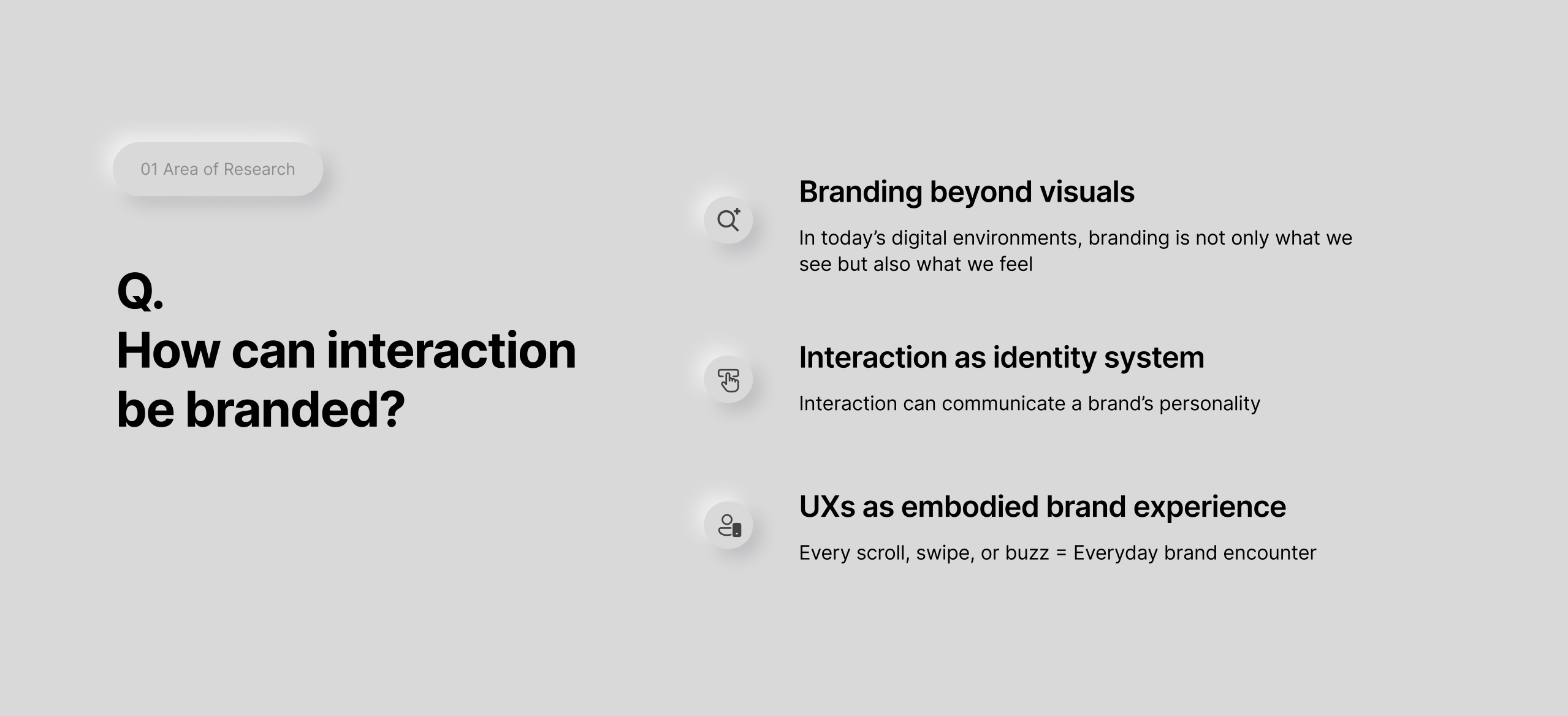
Week 2 Presentation slide
Feedback from Andreas
This week, we got a chance to present our project ideas and research we have done so far. My central research question was "How Can Interaction Be Branded?". Andreas asked me what this actually means. And honestly? I didn't have a great answer. It sounded good in my head, but when pressed to explain it concretely, I realized I was being vague. "Interaction can be branded" is abstract theorizing. I need concrete examples and measurable qualities.
Research Progress &
Theoretical Expansion
Experiential Touchpoints (Kapferer)
Reading Kapferer's New Strategic Brand Management,
some of it was really validating what I've been thinking.
"Brands that are only products must add an experiential dimension that will involve the client, where the brand is lived, felt, touched or heard " (Kapferer 138)
He gives this example about car manufacturers being obsessive about experiential detail. (like Door closing sounds, Leather texture and softness, Armrest positioning, ergonomics, and so on.) None of these are visual branding elements. They're sensory, temporal, experiential. And this is what I want to explore in digital interfaces. The non-visual elements that make you feel a brand. The way interfaces Respond and move.
This is exactly what I'm investigating. Brands need to move beyond transactions toward something embodied and emotional. In digital interfaces, this translates to: How does scrolling feel? How does feedback respond? What personality emerges through micro-interactions?
Kapferer argues that experiential dimensions will increasingly differentiate brands in the future. Which makes sense, when every brand can look polished and minimal, how do you stand out? Through how you feel to use.
"understanding the perceptible dimension of the brand
makes us forget the product alone" (Kapferer).
When a brand nails the experience, you stop thinking about the product's specs or price.
You just feel connected to it. That's the goal.
Materiality of Interaction: Wiberg
So, this is the reading that actually restructured how I'm thinking about this research. Mikael Wiberg's "Materiality of Interaction". This framework directly supports what I'm trying to do.
He builds on the broader "material turn" in HCI (human-computer interaction), which treats digital interaction as materials to be designed with their own properties. His argument: interaction itself has materiality and can be crafted like physical materials.
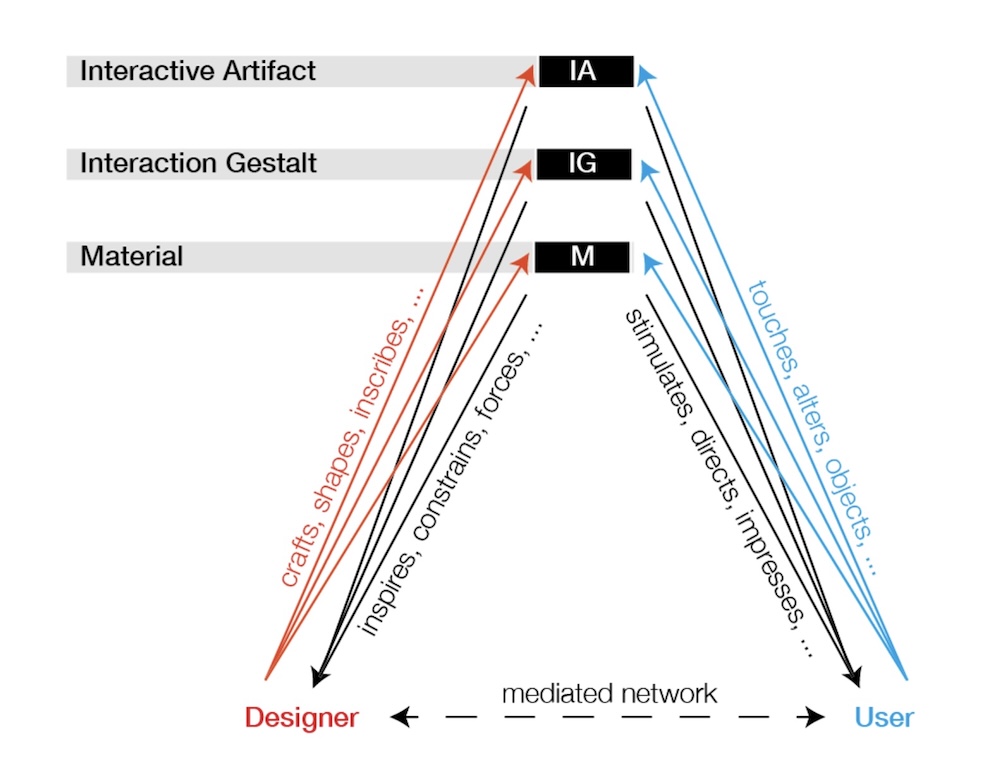
Actor-network between materials, interaction gestalt, interactive artifact,
users, and designers, © Verena Fuchsberger
This fundamentally shifts how we conceptualize interface design. Not arranging visual elements, but sculpting experiential matter. If interaction is material, then branded interaction becomes a form of experiential sculpture—shaping digital matter to embody brand personality.
This foundation is exactly what I needed. It validates using computational prototyping as a sculpting tool. Code lets me manipulate the material properties of interactions (timing, physics, responsiveness) with precision. This gives me concrete language and methodology. I'm not just "making interfaces feel nice." I'm sculpting experiential materials to create branded atmospheres.
Unanswered Questions for Week 3
Which brands/apps demonstrate the clearest examples of branded interaction?
How do I evaluate the effectiveness of branded interactions?
Which coding approaches will best serve prototype development?